Our story
From Italy to South Wales
From an Italian workshop to South Wales
Willow coffins, a passion learnt from my uncle in Italy.
While living in Italy, I was introduced to the design of willow coffins by my uncle. Eventually, I developed a great interest in willow design. I became deeply fascinated by creating coffins and baskets using this natural element.
After moving to the UK, I started creating bespoke willow coffins for a company. While I worked with willow, I gained several skill sets to establish my very own business and ideas of willow design. Therefore, I decided to create my own company.
“My ambition is to expand the knowledge and skills of willow coffins, and to pass on this creative passion as it becomes part of my family heritage.”
The founder
Made in South Wales
Handmade willow coffins, in different shapes and sizes.
‘Bio Willow Coffins’ manufacture in South Wales, creating handmade willow coffins including different shapes and sizes. We take great pride in our work and emphasise the great measures to produce the highest quality for the best prices.
Taking care of the environment
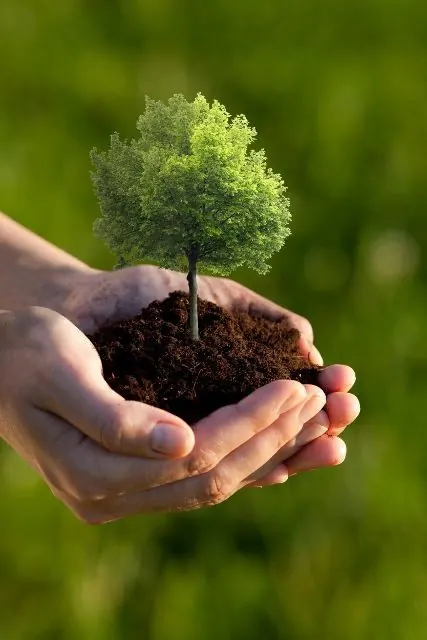
Taking care of the environment is important: our coffins and caskets are eco-friendly, with willow sourced from local farms. Each coffin is biodegradable and uses entirely sustainable and environmentally friendly materials. In fact, willow has been used to make baskets for centuries; it is a sustainable crop, easy to propagate, fast growing and flexible.
Extremely sustainable, ideal for weaving
The willow year, from cutting to coffin.
Spring
Willow sets or cuttings about 6 inches in length are planted out, traditionally by hand.
May to October
A single rod can grow to 8ft tall in one season.
Winter
The leaves fall and provide the nutrients for the following year’s plants.
November to March
The stems are cut, gathered by hand and taken back to the farm for sorting.
April or May
Willow kept in “pits” of water until the sap rises; the bark is peeled to reveal the white inner wood.
30+
rods from a single mature stool8ft
growth of one rod in a single season30+
years of life for each stool300
species of willow worldwideWillow is a coppice plant which grows extremely quickly. A mature stool can give rise to over 30 rods and a single rod can grow to 8ft tall in one season (May to October). Each stool can last over 30 years. This makes willow not only an extremely sustainable material but also one ideal for weaving.
Willow is harvested in winter months after the leaves have fallen. These leaves provide the nutrients for the following year’s plants, meaning no fertilisers are used. Willows belong to the genus Salix, and species of willow have been found amongst the earliest recorded flowering plants and grow in many countries of the world. There are about 300 species of willow worldwide.
Willow sets or cuttings about 6 inches in length are planted out in the spring, traditionally by hand, but machines are now used. The land has to be prepared as with any growing crop, by ploughing and producing a seedbed. Throughout the year the willow bed is weeded and carefully tended to in order to get a good quality crop of willow at the end of the year. The willow is harvested from the second year onwards, then annually for the next 30 to 60 years.
The stems of willow wands are cut after the leaf has fallen, in November through to March. Until quite recently all willows were cut using sharp hooks; now most willows are cut with machines. Harvesting is still very labour intensive, as manual labour is required to gather them up after cutting and loading them onto trailers. The cut willows are then taken back to the farm for sorting.
Some willow is kept for immediate sale for living willow constructions and river bank protection (“spiling”); this willow is known as “green” willow. Some is kept alive by standing in “pits” of water until April or May, to keep it alive until the sap rises, leaves sprout, and then the bark can be peeled off to reveal the white inner wood.
A donation every year
Bringing hope to children and communities in need.
Bio Willow Coffins are proud to contribute a donation every year to charities around the world. We wish to bring hope to children and people whose lives are surrounded by great injustice. Supporting communities in their moments of need is a crucial responsibility. It is our great honour to donate and help change other people’s lives and inspire a hopeful future.